Systems of Record are evolutionary whereas Systems of Engagement are revolutionary.
We are now living digitally mediated lives.
The structure of Business has changed from old hierarchal organisations to Business networks of specialised enterprises.
Use Systems of Engagement to create differentiated moments of engagement.
CIOs Must Plan Now For New Systems Of Engagement
by Ted Schadler (above), John C. McCarthy [Forrester]
“By 2016, smartphones and tablets will put power in the pockets of a billion global consumers. Mobile is not simply another device for IT to support with a shrunken website or a screen-scraped SAP application. Rather, mobile is the manifestation of a much broader shift to new systems of engagement. These systems of engagement help firms empower their customers, partners, and employees with context-aware apps and smart products. To remain vital in this business technology reformation, CIOs must step up and work with other executives to establish an “office of the chief mobility officer” to implement an enterprisewide mobile strategy. This team will coordinate the business and technology investments under a “design for mobile first” mantra that delivers four immediate benefits:
fuel profitable growth with stickier offerings and mobile self-service;
move faster along the mobile learning curve;
aggregate mobile project budgets to fund needed engagement technology; and
grow from an IT group focused on systems of record to a business technology group focused on systems of engagement”.
Operate efficiently to Innovate effectively.
Next Generation Applications have the power to drive innovation
IT is gridlocked in Operating instead of Innovating
Revolutionalising how you manage your Applications
Applications are measured and managed based on Business priorities
We live in an era where Business and Technology are one and the same always on and always connected and applications are at the centre of it. A new era calls for a new approach.
Systems of Engagement are revolutionary and create differentiated and compelling consumer interactions online.
Heretofore Systems of Record Applications, for example SAP have processed large data sets (Big Data) and made the management of information more challenging.
New Systems of Engagement Applications will be dependent on the customer granting permission to use their personal data.
An example of new Systems of Engagement are applications developed to interact with a persons wearable device in an earpiece, glasses or clothing.
This functionality has been available for use by the military and is already on the CIO radar.
If your organisation does not have the capability to Manage Next Generation Applications you will have no choice but to turn to an External Service Provider.
So this means that the Technolgy capability needs to think more creatively about what is required in order to support the engagement of all stakeholders / external customers.
“Don’t miss the innovation boat, turn management assumptions upside down. Change must be dramatic, deep, and transformational. Gary Hamel explains the need for radical thinking that enables every employee to be a business innovator.”
01:45 We are no longer in the Knowledge economy we are now in the Creative economy and that is going to require huge changes in the way we think
02:55 Dramatically increasing the creative potential and capabilities of your own people.
05:00 Require a radical change in Management
Gary Hamel also mentioned that IBM took a $14bn swing in earnings in the 1990s. Under Lou Gartner’s leadership IBM transformed from a Product led to a Services company. Gerstner said:
“Services is clearly the largest and fastest-growing portion of the information technology industry, and we continue to extend our leadership position each quarter, … Our software business continues to gain momentum.”
IBM has a heavy focus on innovation and spends >$25bn a year on R&D. This has had a significant positive impact on the company share price.
Warren Buffet has seen an increase in his $10.7 bn investment in IBM stock to $13.2 bn (Mar 12)
Smarter Business Needs Smarter Thinking
The way we work isn’t working
What if there was a way for CIOs to take thebusynessout of Business
Collaboration solutions enable people to connect to co-workers share knowledge and be more creative as a result.
Social Learning Fosters Innovation
Connect, Contribute and Cultivate to create One Global network
By investing in business innovation both Global High Value Consulting and Services companies are thriving whilst the Indian Pure Plays (HCL, INFY, TCS and WIPRO) are struggling to convince the Market that they have the “secret sauce” required to deliver the same CAGR.
So the thinking around Knowledge Workers has been widely accepted and organisations of any size are at various stages of adoption.
These same organisations are also exploring how new ways of collaboration can unlock the creative potential of people.
Increasingly an individuals performance is being assessed on their ability to create new content, connect with others to share their ideas and help build value for the organisation.
To know is nothing at all; to imagine is everything – Albert Einstein
This week there are two Service / Help Desk conferences taking place in London and Orlando.
In the past the main aim of individuals attending these conferences was to “swan around” and visit as many vendor stands as possible in order to pick up items for their goodie bag. Typically, Vendors showcase new product functionality, however I am not sure how many customer enquiries are converted into firm orders / sales.
In practice not many organisations will be able to make a compelling business case to “rip and replace” their existing solutions. It is important to understand that a solution that is not web, mobile or social enabled will not be fit for the future. It is not possible to transform a “Lada into a Lexus” overnight.
Most large or mature organisations that have moved to a multi-sourcing model will be more focussed on establishing automated interfaces between the various service provider solutions in the value chain. For example, a Global Service Desk may have implemented one Service Management solution and end-to-end interfaces need to be established to their Level 2 / Level 3 external service provider tools.
So attendees have shifted their focus from browsing the exhibition hall and listening to Vendors wax on about all things social / mobile to booking in for the keynote and seminar sessions.
I have looked at the schedules for both conferences and picked out one topic from each side of the pond.
The Service Desk & IT Support Show features the ITSM industry’s leading specialist vendors, integrators, consultancies and service providers.
Lean IT Moving Beyond Cost Savings
Roy Illsley @royillsley is principal analyst, infrastructure management for Ovum
Here is a taster of his presentation.
“Lean IT is becoming a vogue term for how organizations can look to ensure the operational aspects of other functions in business can be made more efficient; hence the term operational efficiency (OE) is now more widely understood. However, moving a function like IT to be a ‘lean’ operation requires organizational change as well as a shift in thinking by the IT department. Critical to this is defining the role of IT within the enterprise and getting both business leaders and IT to agree on the key aspects of responsibility and accountability”
At 3:00 mins – IT must respond at the speed of the Business
At 5:30 – ITIL is not a given right to success
Roy will present the OVUM Model (Chart) at this session
Here is a LINKto his article – Lean IT much greater than a cost saving exercise
“The biggest lesson for any IT department is that lean IT is not about the tools that are used; it is about the processes and procedures deployed.”
The Lean IT: Moving Beyond Cost Savings research paper is available for $1895. Scope:
Segmenting the responsibilities is key to understanding the Lean IT model
Recognize the role of IT differs within and between organizations
Business Relationship Managers (BRMs) do not operate in isolation
Changing the IT service delivery approach to a demand-led model
MOVING TO A LEARNING-BASED APPROACH IS CENTRAL TO UNLOCKING BENEFIT FROM LEAN IT
People, process, and purpose are the key attributes
Session 610: Create, Innovate, and Get Out of the Cave
“IT has evolved so quickly that the average consumer now has access to more online services and collaboration tools at home than they do at the office.
Social media and collaborative technologies are setting expectations around delivery of IT services that most IT departments fail to meet.
Business managers have already started to bypass their IT departments to obtain services faster and IT appears to be losing control. IT organizations that are too slow to evolve face a real threat from outsourcing.
This session looks at the technologies you cannot afford to ignore in 2012.
What can we learn from these new trends?
How can we leverage these technologies to create a better IT experience in the workplace?
If IT is to maintain its reputation and deliver value, we need to change, and change fast.”
Speaker Patrick Bolger @patb0512, Chief Evangelist, Hornbill Service Management.
Here is a LINKto his presentation at SDITS 2011 entitled – Chaos to Value
Slide 7 – The Evolution of IT Focus
Slide 18 – How is IT serving top business priorities?
Slide 21 – Your ITSM Journey Plan
Slide 31 – Although Processes and Technology are important remember that People…
So which side of the pond is best?
Over the years, both conferences have placed more focus on improving the quality and awareness of new Service Management Practices.
This has been achieved through the sharing of thought leadership by recognised speakers at breakfast briefings, sessions across different subject streams and “expert” panels.
For me the HDI conference shades it because it has 8 streams and more recognised “experts” speaking.
e.g. Charles Araujo, Ian Clayton, Chris Dancy, Malcolm Fry, Lou Hunnebeck, Robert Stroud
It is deeply disappointing that both conferences are being held in the same week, so it will not be possible to hear from the “best of the best” in one conference setting. Patrick Bolger is attending SDITS and then he is jumping on a plane to present at HDI which is not ideal preparation.
Methinks Continual Service Improvement is required M’Lud to avoid a conference scheduling clash in 2013.
COBIT 5 was officially launched on Tuesday the 10th of April.
The evolution from COBIT 4.1 shifts focus away from “Control Objectives for Information and Related Technology” to Governance and Management of Enterprise IT.
My take on the evolution of the COBIT 5 framework is that we now have a way of defining and agreeing “Common Objectives for Business and IT“.
The following number of downloads of the COBIT 5 Framework have been processed in just 4 days.
I wonder how many of these downloads have been made by individuals in the Business, Consultants and Trainers rather than IT folk.
The fresh guidance provided in COBIT 5 will make it possible to align Enterprise (Business) and IT related goals by defining and agreeing common objectives.
Common objectives are required to close the communication / expectation gap between IT and the Business. In this video the CEO is talking with the CIO.
How are you helping the Business drive revenue?
Is IT focussing on driving our strategic initiatives?
How are you enabling innovation within the Business?
How is IT aligning to the Business and adding value?
Looks like they both could use some help
So how should you address the gap in perception and reality?
A good place to start is to read the new Evaluate, Direct and Monitor processes for the Governance of Enterprise IT, specifically:
EDM02 Ensure Benefits Delivery and
EDM05 Ensure Stakeholder Transparency
these processes will help the Business and IT to develop a shared understanding of stakeholder needs and value realisation.
The spring issue of ServiceTalk dropped on my mat this week and contained an article by Robert E Stroud entitled COBIT 5 : Delivering Value Through Governance and Management. The 2 page article, tucked away at the back of the magazine, provides an overview of the COBIT 5 Framework, Enabler Guides and Professional Guides.
You have to a member of itSMF in order to view the article online. LINK
Stroud states that “Value can only be realised when COBIT is adopted and adapted to fit a particular environment. The implementationmust ddress the specific business challenges, including mnaging changes to culture and behaviour”.
WHY ARE COMMON OBJECTIVES FOR THE BUSINESS AND IT SO IMPORTANT?
There is an expectation gap between the Business and IT because Enterprise and IT related goals are not aligned.
The purpose of Internal or External IT Service Providers is to serve the Business. A successful relationship can only work if there is a set of shared goals and common objectives. COBIT 5 practical guidance is a great place to start in order to address communication gaps and have the right conversations.
The COBIT 5 framework enables the Business and IT to talk about the same things in the same way. Tighter integration is required between the Business and IT in order to drive solutions and lay the foundations for a Transformation journey. (from 37 seconds in)
We are operating in a Multi Sourcing environment and COBIT 5 will jump start the ability of Service Integrators to implement the right governance processes.
Failure to act and demonstrate value to Business Executives will open the door for the Consulting firms / Independent Consultants who sit at the intersect between the Business and IT.
Making excuses that the IT organisation is too busy to carve out time to understand, plan and implement the COBIT 5 guidance is not acceptable.
Get involved or you will be bypassed and become irrelevant.
The new COBIT 5 framework covers the Governance of Enterpise IT and sets out the guidance to achieve business objectives and help increase business user satisfaction with IT.
The three COBIT 5 publications introduce, define and describe the principles, enabling processes and the implementation steps.
“COBIT 5 brings together the five principles that allow the enterprise to build an effective governance and management framework based on a holistic set of seven enablers that optimises information and technology investment and use for the benefit of stakeholders.”
Principle 1. Meeting Stakeholder Needs – Stakeholder needs are translated into specific Enterprise, IT-Related goals and Enabler goals
Principle 2. Covering the Enterprise End-to-End – Governance and Management of information and related technology is addressed from an enterprise-wide, end-to-end perspective.
Principle 3. Applying a Single Integrated Framework – COBIT 5 defines the overarching governance and management framework that has been designed to integrate seamlessly with other good practice guidance e.g. ISO 38500
Principle 4. Enabling a Holistic Approach – The seven categories of Interconnected Enterprise Enablers are set out below:
Principle 5. Separating Governance from Management
COBIT 5 advocates that organisations implement the key governance and management processes.
Significant attention should be given to the five Evaluate, Direct and Monitor processes.
COBIT 5 provides an end-to-end view of the 37 processes for successful governance and management of Enterprise IT.
A separate publication describes the 7 Implementation Steps in detail.
Derek Oliver, Co-Chair COBIT 5 Task Force at ISACA, discusses the business benefits of using COBIT 5.
Access this link to reserve/download your copy of COBIT 5. You will need to register with ISACA and state your affiliation before you are able to do so.
The COBIT 5 Framework of 3 concise Publications and supporting Toolkit provide fresh thinking and guidance on what is required to successfully Govern Enterprise IT.
This version is an evolution of the previous guidance and sets out how to implement key Enterprise IT Governance and Management processes.
The COBIT 5 Process Capability Model and Training Curriculum will be released shortly.
The launch of the COBIT 5 Framework enables Business Executives to articulate their specific stakeholder needs in a language that is common to Internal and External IT Service Providers.
Failure to understand and apply the new guidance will lead to an imperfect future for the IT organisation.
Business Executives have decision rights on how they source the provision of services. They will gravitate towards the IT organisations who can “talk the COBIT 5 talk” and can demonstrate value delivered.
Previously I have published two posts about COBIT 5
In my November 2011 POST – COBIT 5 is coming – will you be ready? there is a link to the Exposure Draft version of the Process Reference Guide.
and in my February 2012 POST – COBIT 5 is now approaching the finish line – there is a detailed description of the seven implementation steps.
For the two thirds of my readers who are in the US. COBIT 5 is here – HOOYAH
Ian Clayton (Principal – Service Management 101) and Kenneth Gonzalez “KENGON” (Managing Partner – Engaged Consulting)
Ian and Ken shared their perspectives in an informal manner.
Subject Matter
Fall from C-Level grace of ITSM, BSM and ITIL
How to successfully develop a service catalog
Next Generation Talk – what is around the corner? Drop the IT from the front of ITSM
Framework Wars – futility of COBIT vs ITIL argument proposing that one is better than the other
Fall from C-Level grace of ITSM, BSM and ITIL
Causes and Consequences
So what happened to the promise of ITIL and ITSM, why have they fallen from grace?
Dropping the IT from ITSM is not going to make a difference.
Need to explain ITSM and set senior stakeholder expectations. Service Management applied to IT
What are the immediate and future consequences?
Budgets are constrained so explore concept of Quick Wins – which are only true if the customer declares it a quick win
Putting things in 30, 60 and 90 day containers is important. Chop transformation project up into small bits
Build customer centric outcomes
There are so many sources of guidance that can be mined
Collaborate with communities of practice to solicit others viewpoints – LinkedIn, #Back2ITSM, #USMBOK etc.
How to successfully develop a service catalog
What is the definition of a service that a customer will recognise?
Example Product Catalogue. Relates to a customer scenario and what they are doing on a daily basis
A service is a type of product
Bundling and Unbundling services
Build a service request catalog
Service offerings are different based on which customer segment is utilising it
Next Generation Talk
Is it time to press reset on the service management button?
Is it you or your management who have pressed the button?
How is what you have implemented working for you right now?
Define and agree what do you need
Practitioners believe that we need to do things differently. Update or refresh our thinking
It is important to explore thinking and methods used by successful service provider organisations as a blueprint for next generation service management
Conversation is more vibrant around Next Generation.
We are not saying that anything is wrong however we must keep on the move – keep pace
Make sure are tools are sharp and training is even sharper
Do we need to press the reset button? No we need a mechanism for maintaining momentum
Framework Wars
Futility of COBIT vs ITIL proposing that one is better than another
It is the height of lunacy to only choose one.
How do we compare and contrast guidance in order to apply it more effectively
Frameworks must be compared against the same criteria
Position USMBOK – 90% of which is outside of IT. USMBOK – this is the language that I use
Customer centric thinking Outside-In conversation
What I consistently hear from clients is that ITIL is a dirty word because the significant project cost did not deliver the stated benefits or culture change. The PINK folks talk about Attitudes, Behaviours and Culture. Listen to what Troy has to say:
I agree that removing the IT from ITSM is not a panacea for all ills. Service Management is not the exclusive domain of the IT organisation rather Customer Service Management, Field Service Management and Supply Chain Service Management have been around just as long.
How about we focus on defining and agreeing upon the set of Service Management Practices which become the overarching theme (roof) that sits above the different process frameworks (pillars). (ITIL 2011 Edition, COBIT5, ISO/IEC 38500, ISO/IEC 20000, USMBOK, TIPU etc.)
Service Management Practices aim to strengthen the focus on ‘Business and IT integration’ and also recognise the need for management of IT throughout the complete service lifecycle.
You would not play a round of golf with only one club in your bag, so I agree with Ken that “it is the height of lunacy to choose one” over another framework.
Internal / External Service providers should strive to achieve Service Excellence by choosing from a smorgasbord of good (not best) practice guidance rather than eat from the one dish. Sitting at the table with the Business to talk about the desired outcomes they value is a given.
“The Outside-In Service Management™ (OI-SM) program helps service organizations apply “Outside-In” thinking to service management initiatives, ensuring customer centricity, customer thinking, and the creation of value for customers.”
I have not religiously applied “Outside-In” to my client projects choosing to stay with proven Six Sigma Voice of the Customer [VOC] principles. Basically the Voice of the Customer is a term that is used to describe the process of finding out what your customers want and need. This is accomplished by using surveys, stakeholder focus groups, workshops and actual interviews with your customers.
In addition, Lean Six Sigma for Service also sets out the way to focus on customers. LINK
A common mistake that I see with problem projects is that there is no concept of a joint Business and IT implementation team. Moreover the delivery of stated benefits is not reviewed regularly with the customer and formal sign-off obtained before the project advances to the next stage.
This week the IT Service Management gurus have been discussing whether ITIL is Broken.
David Moskowitz – Interesting discussion @ Facebook #back2itsm group regarding whether #ITIL is brokenhttp://goo.gl/QxdBR (hint, I don’t think it is) #ITSM
ITILZealot – @davidm2 #ITIL isn’t broken, it is a nirvana that may never be totally achieved but functions as a goalpost to aim for
David Moskowitz – Admit I’m tired reading about how broken#ITIL is. Hint: it’s DESCRIPTIVE meaning it’s meant to be adapted. So… adapt, don’t complain
You will have to join the #back2itsm Facebook group to view the interesting discussion thread.
The exam question is not whether ITIL is Broken, it should be about the quality of the explanatory guidance provided in the ITIL 2011 Edition core volumes.
In my experience the books describe “What to Do” but contain insufficient detail on “How to Do It”
Let’s drill into a particular topic by taking a look at the guidance provided by the ITIL industry standard framework for Supplier Management and Multi Vendor Management.
Service Design – 4.8 Supplier Management
The purpose of the supplier management process is to obtain value for money from suppliers and to provide seamless quality of IT service to the business by ensuring that all contracts and agreements with suppliers support the needs of the business and that all suppliers meet their contractual commitments.
I encourage you to read through all of section 4.8 for example 4.8.5.3 Supplier categorisation.
Service Strategy – 3.7.3 Multi-vendor sourcing
Sourcing services from multiple providers has become the norm rather than the exception. This approach has been delivering benefits and gaining increasing support. The organization maintains a strong relationship with each provider, spreading the risk and reducing costs. It should also be noted that each provider may represent a different type of sourcing option.
Governance and managing multiple providers, who often have little to do with each other outside of the common customer, can be challenging.
Service Strategy – 3.7.5 Sourcing governance
Governance refers to the rules, policies, processes (and in some cases, laws) by which businesses are operated, regulated and controlled. These are often defined by the board or shareholders, or the constitution of the organization; but they can also be defined by legislation, regulation or consumer groups.
This description of Sourcing Governance is non-specific. What is required is a practical example of how a Governance Board provides oversight for multiple vendors.
The purpose of the Vendor Management Board is to ensure that strategic vendors are acting as global service partners in the company’s best interests, in a way that is consistent with the intent of contractual obligations.
Objectives of the Board:
Maintain a productive and well managed strategic relationship at the most senior levels
Provide a forum for open and honest two-way communications between client and the prime vendor
Ensure that both client’s and the vendor’s relevant medium-term and long-term strategic imperatives (business, technical, etc) are understood by both parties, and potential opportunities and risks are identified
Identify and exploit opportunities to leverage the relationship between client and the vendor in order to add value
Provide a forum for reviewing holistically at a global level the service being provided to client by the vendor
The Vendor Management Board should meet formally every quarter at a minimum
IT/BPO Outsourcing and Supplier Management explained
Thomas Coles – MSM Software
00:30 MSM have been engaged by a client to manage the relationship with over 25 suppliers.
What does ITIL have to say about the Supplier Manager role and responsibilities?
Service Design – 6.3.12.1 Supplier Management Roles
This section sets out the Process Owner and Process Manager responsibilities that need to be performed in support of the supplier management process.
For example, the Process Owner works with the business to ensure proper coordination and communication between corporate vendor management and/or procurement and supplier management.
Section 6.3.12.1 does not provide the right level of guidance to define and effectively establish the role. Here is a more detailed [15 point] list:
The Vendor Manager is responsible for:
Developing and maintaining executive working relationships with strategic vendors
Facilitating negotiations and commercial engagements with the vendors for current and future business requirements
Creating an escalation path within the vendor organisation for the purposes of dealing with high profile service and account management issues
Implementing best practice vendor management processes in addition to the ongoing governance thereof
Acting as an escalation point for vendor performance or governance issues
Managing the dispute resolution procedure relating to claims or disputes between the service organisation and its strategic vendors
Liaising with business relationship managers to channel and prioritise their requirements to the vendor(s) and to ensure that internal customer expectations are met.
Evaluating sourcing strategies to ensure they reflect Client’s operational and vendor experiences
Developing the contractual elements of the sourcing strategies
Evaluating markets for sourcing developments and opportunities
Maintaining a current understanding of external environments, including vendors and product innovations
Managing review meetings with strategic vendors to ensure delivery against objectives and contract budgets, developing regular reports on contract, and commercial milestones and performance, and informing internal customers, vendors and management of activities and progress through regular written and verbal communication
Administering commercial and financial arrangements with vendors to include billing, invoicing, performance/penalty adjustments and internal charge-backs, where appropriate
Managing ongoing regional or local evaluation and benchmarking requirements for ITO and BPO services
Managing the evaluation of vendors against the efficiency and effectiveness metrics, and report results and findings to IS and business stakeholders.
Vendor Management – Best Practices For Your Business
Regardless of what business you are in, vendors play a key role in the success of your business. By using the following vendor management best practices to build a mutually strong relationship with your vendors you will strengthen your company’s overall performance in the marketplace.
Vendor Selection – right vendor for the right reasons
Vendor Search – create a short list of vendors that meet the defined requirements
Flexibility – willingness to work towards a mutually beneficial contract
Vendor Performance Monitoring – must be monitored constantly in the beginning
Communication – avoid misunderstandings and proactively address issues
A well managed vendor relationship will result in increased customer satisfaction, reduced costs, better quality, and better service from the vendor.
Carmela DeNicola, FYI Business Consulting
I recommend that you read the full article which provides more detail for each of the five best practice areas. Here is the LINK
Bill Laberis – In tough times, lean on your vendors
You can and should lean more heavily on your big IT providers to prove tangible and intangible value
The Next Wave of Vendor Relationship Management – LINK
What is the next great strategic sourcing practice for sustaining cost reductions and driving an efficient, competitive business in an environment that is constantly and dramatically changing?
The answer is in how companies are addressing vendor relationship management and creating incentives that better leverage the capabilities of their current providers.
Most mature outsourced companies have created a concentrated multi-provider base, often with a handful of large sourcing vendors playing a major role in supporting the organization. These efforts have shifted business critical processes and value chain activities to outsourcing providers, creating new major provider relationships that are vital to operational continuity.
Accelerated software delivery life cycles, vastly more sophisticated infrastructure virtualization, rapid pace of process and technology convergence, and the need to work seamlessly with offshore vendors have made effective vendor relationship management more demanding and more critical than ever before.
The challenges of Multi Sourcing
FUJITSU UK executive Discussion Evening
If you can get past the annoying background noise this video clip has sound perspectives from senior level practitioners.
At 02:55 Dr Richard Sykes of Intellect talks about the need for outcome based agreements with a single vendor which is not Multi Sourcing.
Multi-sourcing: CIOs tips on making it work for you –
and your suppliers
Businesses are moving away from trusting single suppliers to deliver multi-billion pound outsourcing megadeals in favour of accessing services from multiple providers instead.
Almost 40 per cent of CIOs surveyed by Harvey Nash/PA Consulting Group last year said they planned to increase their use of multi-sourcing – where IT or business process services are sourced from a range of suppliers rather than a sole provider.
Multi-sourcing, as well as providing access to services from best in breed suppliers, offers a way around the common pitfalls of being locked into a long-term deal with a single vendor. Long-running outsourcing deals with sole suppliers can encourage low innovation, sloppy service delivery and customer dissatisfaction as the supplier, safe in the knowledge that it has a multi-year contract, has little incentive to try too hard.
However multi-sourcing is not without its risks, in particular the potential for the deal to come apart if the client fails to get to grips with co-ordinating multiple providers or if communication between suppliers breaks down.
At the recent CIO Event, CIOs shared their thoughts on the best ways to get the most out of multi-sourcing and keep multiple suppliers on track:
Check whether multi-sourcing is the right approach
Small deals may not be suitable to be broken up and delivered by multiple suppliers.
Outsourcing contracts often require suppliers to invest upfront and if splitting a deal into smaller contracts reduces their value too much, suppliers will likely reject the job as not being viable.
Companies should also check how many suppliers have the skills needed to deliver the work they want to outsource.
If only a small pool of suppliers are able to carry out the work then multi-sourcing may not be the best approach as there will be too few qualified suppliers to provide competition.
Nick Heath
This is an extract from a longer article which also explores the following: Competition is good, Reward joint success, Keep suppliers clued up and Align your goals. LINK
IT services the end of multi-sourcing is nigh
Multi-sourcing is dead; long live the trusted advisor. As contracts reduce in size, power is being redistributed to the key players in many outsourcing engagements, according to Ovum.
In the new report*, the independent IT and telecoms analyst firm finds that on the back of an ever reducing number of megadeals the average contract value has fallen to USD$65m in the first nine months of 2011.
Jens Butler, Principal Analyst of Ovum and author of the report commented: “The mix of major providers in outsourcing contracts has shifted from the much-heralded multi-sourcing approach to a more contained portfolio of suppliers and services in recent contracts.”
The report uncovered the increasing prevalence of single “capstone’ vendors “controlling” larger proportions of contracts. On average 60 per cent of total contract values (TCV) are being allocated to a single, lead supplier across multiple supplier deals signed since 2009 highlighting the fact that consolidation of control and governance is shifting to a single, trusted supplier model.
“The more mature markets are moving towards consistency in contract size and length, enabling suppliers the ability to plan and think strategically and develop value that can be delivered through the lifecycle of the contract”, said Butler.
The report notes that in the emerging markets, cost management and control are less of a core factor in decision making and there is a tendency to leverage IT to support business growth and expansion. As such, the key driver for enterprises when investing in IT is speed of delivery.
Butler recommended that enterprises need to be prepared to engage with multiple suppliers, offer a big enough carrot of additional services and to be prepared offer more applications into the mix in the emerging markets.
Jens Butler
* IT Services Contracts: A Single, Trusted Supplier
Many factors are driving a review of IT sourcing strategies:
Business Drivers
Meet growing business demands for IT solutions that contribute to competitive advantage
Accelerate time-to-market for IT solutions, such as for new business models
Maintain high satisfaction levels with business
Financial Drivers
Reduce IT costs
Maintain a flexible cost base
Maximize returns on IT investments
Balance costs, quality and service levels
Capability Drivers
Re-skill and up-skill IT personnel
Focus on IT capabilities that will deliver business value
Risk Drivers
Address IT performance issues
Improve IT workforce management
Multi-sourcing has become a de-facto standard service model for outsourcing in large companies as it accumulates benefit from the capabilities of the best players.
However it should be noted that the benefits of multi-sourcing come at the price of increased complexity. Additional complexity is created where the organisation has implemented:
key nearshore and offshore locations to provide balance between skills availability and service cost
a hybrid model enabled by private and public cloud services
Companies must stand up a retained IT organisation which is responsible for Vendor Management providing oversight of the outsourced suppliers, commercial management and end-to-end service management capabilities.
The retained IT organisation must be specialists who will typically focus on the following topics:
Buying Services: Company focuses on what services needed and not on how they should be delivered
Service Levels – Management through output measures e.g. KPIs, enhanced and predictable service levels without resource constraints
Pricing – Service based pricing; paying for usage with annual cost reduction targets
Contract Terms – Service unit prices defined up-front; payment related to service usage
Contract Governance – Client controls demand, but not delivery
Retained Skills – Focus on service procurement, business enablement, requirements and service measurement
Processes – Client buys standardized processes and tools (based on best practice frameworks) instead of spending company resources to build and maintain them
Multi sourcing is typically enabled by a prime service integrator. The prime integrator (lead supplier) ensures service levels through industrialised Service Management practices which are supported by an integrated toolset.
Industry standards, such as CoBIT 5, ITIL 2011 Edition and ISO/IEC 20000 have an important part to play in the standardisation of ways of working across multiple vendors.
I hope that you now appreciate that implementing a multi sourcing service model and multi vendor management is much more than just the supplier management process and roles described in the ITIL 2011 Edition core volumes.
Gartner recognises this as one of the greatest areas of stress for CIOs, how to make sure you choose the right service suppliers, and how to get them to work for your benefit not theirs.
The Brightalk folks organised another set of super Wednesday webinars.
The subject that caught my eye was entitled “The new normal for IT Management” and was presented by Forrester analyst Eveline Oehrlich.
Here is the LINK but please note that you may have to register in order to view the webinar.
The key messages that I took away from her presentation were as follows:
Clients are buckling up on IT Consulting spend which is down from 11% last year to 6%
The Business is bypassing IT and building their own Shadow IT capabilities.
Shadow IT is the BYOD [Bring Your Own Device], on demand software applications and customised services that sit outside the control of the traditional IT organization.
This means that collaboration between the Business and internal / external service providers is critical to success.
We are on a journey from IT to empowered Business Technology innovation.
What is Empowered Business Technology?
The empowered era has brought about a paradigm shift for IT organizations. Employees and customers are no longer relying on IT to provision and manage technology. They are using social, mobile, cloud, and video technologies to bypass IT.
Forrester believes that these changes bring a unique opportunity for CIOs to step up and transform their IT organizations into influential and critical business partners. The voyage will not be easy for many CIOs, and it will require a completely different mindset, organizational competency, governance model, and sourcing strategy.
How CIOs can enable an empowered Business
Forrester sees three forces reshaping IT by 2020: the explosion of business-ready, self-service technologies; the growing influence of a tech-savvy, self-sufficient workforce; and a radically new business market shaped by emerging economies that will soon dwarf the established ones. These may not sound like IT concerns, but they will profoundly affect how IT is viewed.
In the past, when new waves of technology swept into our businesses-beginning with PCs in the 1980s and continuing to today’s self-service technologies-the reaction has been a pendulum swinging between centralized, industrialized IT and decentralized, embedded IT.
Businesses must move to a model we call Empowered Business Technology (BT), which embeds enabling technology innovation into the business while providing just enough centralized coordination and oversight to meet enterprise wide goals and control costs.
Empowered BT lets businesses pursue opportunities with grassroots solutions while still balancing enterprise concerns.
Key to success is the interplay between four new meta-roles:
Visionaries, who look for new tech-enabled business opportunities;
Consultants, who provide on-demand expertise to turn these ideas into reality;
Integrators, who connect innovative solutions to each other and to core systems; and
Sustainability experts, who ensure solutions are scalable and sustainable in the enterprise.
These roles are combined with a new operating model based on guidelines, mentoring and inspection. Each business organization will fill these roles in their unique way.
What does this mean to CIOs?
First, work with your business colleagues to determine how radical a change your company envisions so you know what priority to place on transforming IT. Then work with the innovators in your company to craft a firm-specific vision and begin working toward it. To do this right, IT needs to embrace business ownership of technology decisions. As CIO, you should be poised to help your company profit from the massive change that’s afoot in the business climate.
Alex Cullen and James Staten are vice presidents at Forrester Research.
Beyond alignment a road map for business centric CIOs
by Nigel Fenwick with Khalid Kark, Lauren Blackburn
Forrester characterizes the change in how CIOs must think about the emerging role of IT as part of the customer-value ecosystem as a move toward “empowered business technology.”
CIOs have successfully implemented any one or more of a wide range of frameworks, methodologies, and practices such as ITIL, COBIT, ISO 17799, CMM, PRINCE, MSP, PMBOK, Balanced Scorecard, and Six Sigma.
Yet despite all of these frameworks to run IT (or in some cases perhaps because of them), business units within our organizations continue to feel that IT cannot respond fast enough to needs of the business.
EMPOWERED BUSINESS TECHNOLOGY WILL RADICALLY CHANGE THE CURRENT IT ORGANIZATIONAL MAKEUP
The successful CIO in the age of the customer will possess equal measures of business competency and technical understanding; will be a skilled communicator and a passionate leader, equally comfortable meeting customers and executives; and will be obsessed about customers. For tomorrow’s CIOs, an MBA will provide a stronger educational foundation than a degree in computer sciences.
And not all of today’s IT employees will feel comfortable moving toward empowered BT. Some roles, like business relationship managers, will evolve into more pivotal roles for IT’s success, while others, such as application development and operations have already started moving out of IT. While IT will still develop applications within an empowered BT environment, and operations will still maintain server farms and networks, more and more of these roles will shift toward vendor-provided solutions and services.
So what is my take on the journey from IT to Empowered Business Technology.
If you look back to any Investment Banking Trading Floor a few years ago you will have found a myriad of very high specification personal computer hardware sitting under peoples desks. These configurations allowed the analyst to have full access and control of their custom applications and data.
About 5 years ago Hedge Funds needed more raw compute power for their Algo / Quants Trading so the Business would order in more blade servers and storage required to gain a competetive edge. The IT folks would only find out about the new kit when it arrived on-site.
These are but two examples of old school “Shadow IT”.
What is different about the new normal is that the Business can now purchase and consume complete end to end solutions. For example Salesforce CRM or Workday “Software-as-a-Service”. This means that the portfolio of services that IT provide is being eroded and there is a real risk that IT will be left running legacy applications (Keep the Lights On / Keep the Show On the Road}
I definitely agree that the Business Relationship Manager or Business Partner role is a pivotal one. The role is described in the ITIL 2011 Edition Service Strategy Core Volume.
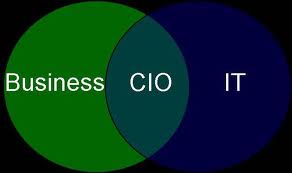
Going forward all IT organisations will need the BRM to sit at the intersection between Business and Technology. This means that the BRM must be involved in Investment decisions and the prioritisation of Business projects. Please note that there is no such thing as an IT project there are Business projects with Technology components.
The immediate challenge we face in making the journey from IT to empowered business technology is to define, agree and implement just enough centralised co-ordination and governance oversight.
I recommend that you look to COBIT5 for guidance on how to define Enterprise and IT related goals in order to stay relevant. Link to the Reference Guide.
Finally let’s hear what Forrester has to say about the age of the customer and the need to focus on customer facing processes / customer data.
Sharyn Leaver spends much of her time advising CIOs and firmly believes that the CIO can drive innovation because they are able to take a cross functional view
Opening video – Do you get it yet – are you ready?
IT Service Management is crying out for vision and leadership right now.
Leading practitioners are defining optimum practices in IT Service Management.
Attendees better understood the need to target the next level and how best to move another rung up the ladder.
The Pink team should be commended for inviting three creative and motivational speakers to address the conference plenary sessions.
Listening to conference key note speakers is the easy part. Putting key learning’s into practice is much more challenging.
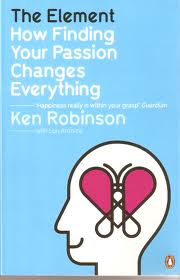
Creativity expert and author Sir Ken Robinson explains what can happen when passion meets natural talent.
When people arrive at the element, they feel as if they are in the zone and inspired to achieve high performance.
The book sets out how to enhance creativity and innovation in both personal and professional settings
“When people’s passion is excited they engage in innovation and development”
“If you’re not prepared to be wrong, you’ll never come up with anything original”
These quotes were shared on Twitter soon after his presentation ended.
“The great danger we face as we become more intimately involved with our computers … is that we’ll begin to lose our humanness, to sacrifice the very qualities that separate us from machines.”
We have become more superficial shallow thinkers.
Attentiveness is the ability to tune out distractions.
Joanne Cantor describes how to preserve productivity under information overload
Why you need a balanced information diet
If you were unable to attend the conference or view the livestream feeds I hope that these clips provide an overview of the ideas shared by these three key note speakers.
By taking these recommendations onboard attendees were energised to create Monday Morning Action Plans.
The conference opened with the rallying call that “ITSM is crying out for vision and leadership right now”
For me Leadership in Service Management Practices is about:
Acting as the Service Evangelist and inspiring those around you to achieve service excellence.
Fostering a service mindset and rewarding people who develop service acuity.
Adopting collaboration tools to engage with like minded professionals and continue the debate post conference.
Taking control of the future state vision back from Vendors into the ITSM community.
What will become of the chief information officer by the year 2020? One only need reference the rapid change of both technology and the information technology (IT) function over the last 50 years to ascertain that the continued metamorphosis of the CIO role is unarguable.
Four macro-level, disruptive forces are largely responsible for IT’s waning influence:
The first was the bursting of the dot-com bubble.
The second was the “the great recession” – the second recession of the decade
The third force behind the trend reversal was the emergence of capable, global outsourcers.
The fourth was the development of technologies that took technology out of the hands of the IT department and gave it to a set of service providers or even the end-user.
CIO – Disruptor or Disrupted
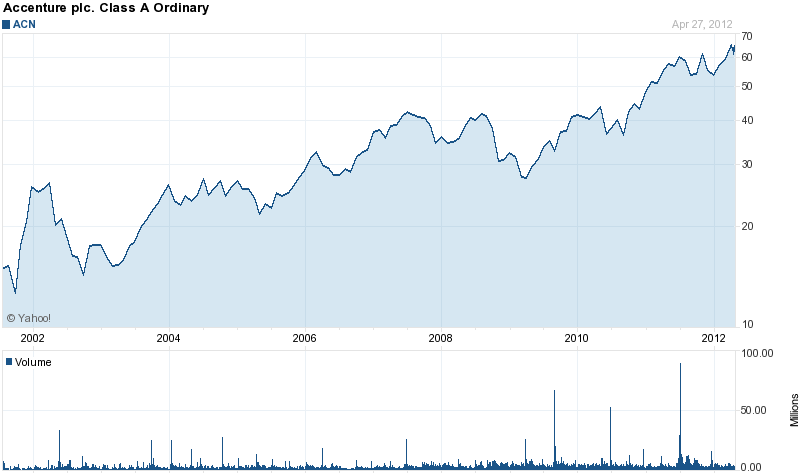
Kevin Campbell (Accenture)
CIOs are now faced with increasingly fast technological change and the increasingly critical demands of business, says, which for them represent both a threat and an opportunity.
IT Leaders Spotlight Critical Role of CIO as Enterprise Leader and Essential Driver of Business Growth
Great CIOs deliver exceptional leadership, innovation and transformation. That was the main message at the [HMG] CIO Executive Leadership Summit held last week at the JW Marriott in Houston
Multiple breakout sessions and panels covered critical challenges such as enterprise leadership strategy; “cloudonomics” and delivering business value through cloud computing; guiding enterprise transformation; supporting innovation; protecting sensitive information; human capital development; and the emerging leadership challenges facing CIOs in the 21st century enterprise.
How CIOs can ensure they are fit for the future
Tom McEwan (PA Consulting Group)
CIOs must get the balance right between utility and innovation in order to enable their organisation to be Fit For the Future, and secure influence.
Carolyn Duffy Marsan – Network World
Top IT executives are spending more of their time [77%] than ever on business issues, such as finding ways to generate revenue and speed products to market through the adoption of new technology, rather than worrying about day-to-day operations of data centers or networks.
Ray Wang (Constellation Research)
CIOs of the future will no longer oversee multimillion dollar IT projects and lead organizational change through technology adoption. Instead, the CIO definition will be broader, demanding that CIOs deliver more business value, profitability and market differentiation.
How will the CIO Thrive?
The CIO must strive to build a true service organization, operating like a business within the business.
The CIO must guide their organization in leveraging technology to move the business forward.
The CIO must lead the technology team to better meet internal stakeholder needs. For example, addressing the consumerization of IT where staff want to use personal devices and technologies they are comfortable with at work.
To thrive in the future the CIO must consider ways that big data, mobility and analytics can deliver value to the Business and external customers.
Big Data – A highly valued digital treasure trove to help meet the evolving needs of customers, spot trends and create new products and services.
Mobility – New devices, whether smartphone or tablet are placing new demands on organisations and service providers about how they interact with customers.
Analytics – More “predictive” analytics helps organisations to use the insights gathered to make more effective decisions that can deliver better outcomes.
Ideally the CIO must either be a member of the full exec board or participate in the same governance forum as the CFO and COO.
The difference between the good and great CIO is that their focus is less about managing technology but more about spending the majority of their time delivering the business change agenda.




























 thisiswhatgoodlookslike