
BrightTALK have organised a series of summits to address topical subjects. The format of these summits is a number of live webcast presentations which are recorded and available to replay. On Wednesday 16th November the Service Catalog, which is perceived to be a hot topic, was covered.
The purpose of this lengthy post is to provide review comments for each presentation. The presentations are organised by the webcast vote they received on the day [Lowest to Highest]. Whilst this approach is not comparing like for like (attendee numbers vary) it does provide an indication of how well the key messages were received by their target audience.
At the end of the post I will share my own Point of View or key observations based on my deep experience of Service Management Practices which are vendor agnostic.
The Map is Not the Territory – Aligning Service Catalog to your Customer
Nathan Allchin (City of London Consultancy)
Webcast Vote = 2.7 / 5
There is a fundamental difference between a thing and its representation.
Customers like the idea of a Service Catalog because it reduces interaction costs, timescales and is useful for transaction purchases.
Service Providers like the idea of a Service Catalog because it reduces interaction costs, timescales and provides an opportunity for up sell.
Most of them don’t work as the Service Provider is not customer focussed, the Catalog has been built for ITILv2 which is out dated and it is hard to do, let alone well.
The ITILv2 and ITIL v3 definitions were examined in detail.
Outcomes – derived from performance of assets and are limited by pressure of certain constraints.
Services have value when they enhance the performance of these assets and reduce the grip of constraints.
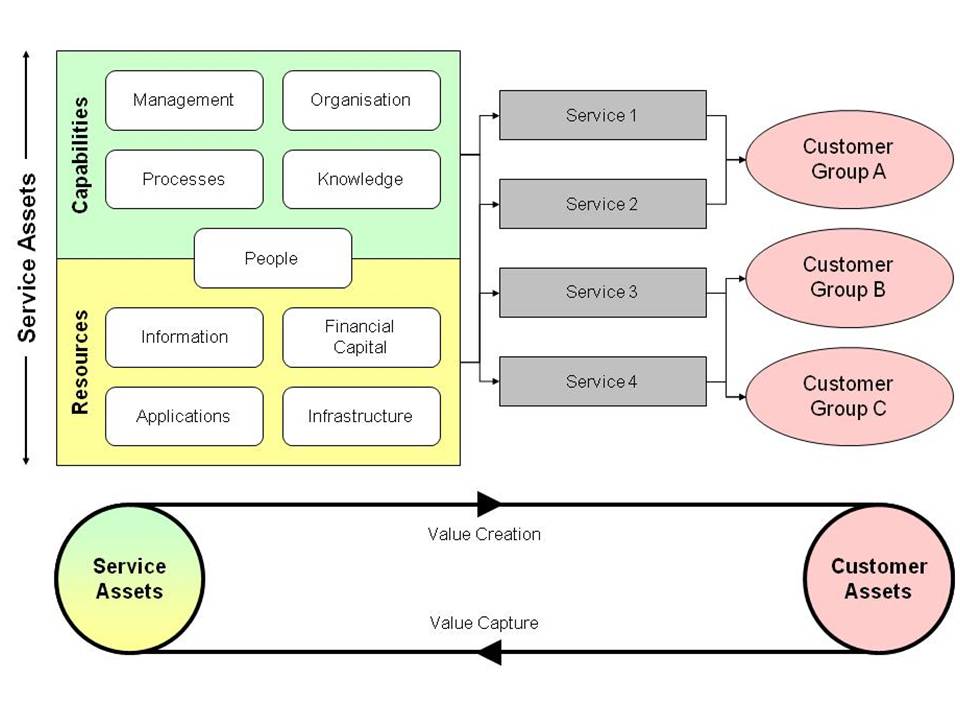
Service Assets are a specific configuration of assets = a service. Service Assets support external outcomes.
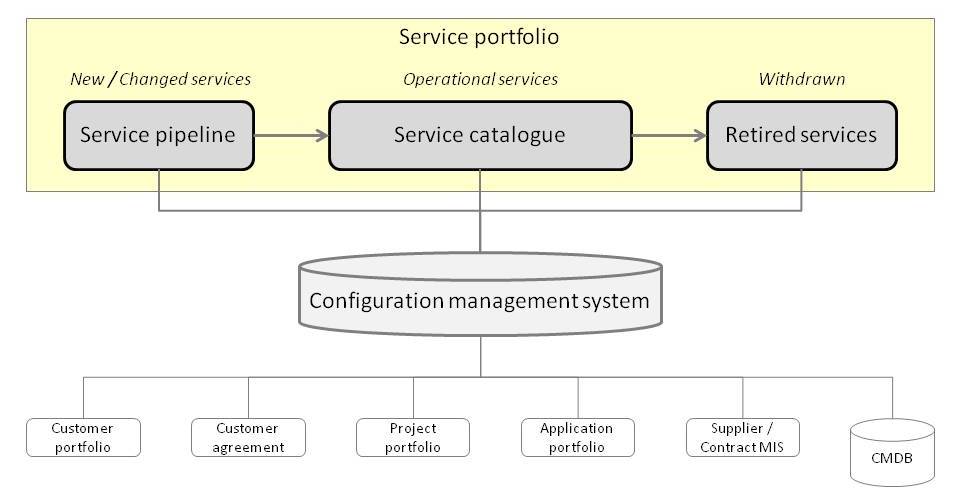
ITILv3 – Business Units & Service Assets. Service Portfolio. Value of Service Management.
This presentation set out a number of key concepts of the ITILv3 Service Strategy core volume, for example Service Assets and associated constraints. In my experience a large number of practitioners are not comfortable with the need to describe the Capabilities and Resources required to create a Service Asset. This is further evidenced by the fact that the ITIL 2011 Edition Service Strategy and Service Design core volumes have less focus on Service Assets which are the key building blocks for defining services. Service Providers (Internal & External) shy away from drilling down into the detail.
Catalog your SLAs
Kulvinder Bhupal – Principal Consultant CA
Webcast Vote = 3.1 / 5
How does IT simplify accessibility?
Challenges – become agile, control / reduce costs, consider cloud edge, disconnect between what IT provides and the perception of delivery.
Where do we start – define & measure, control IT spending, increase operational efficiency. Automate Service Delivery – e.g. enable self service, dynamic infrastructure, automate process improvement.
Define Business and IT service offerings in an easy to manage web based Service Catalog.
Translate what you do in Business terms.
Improve Customer Satisfaction.
Align services and costs to the organisation (clear visibility, transparency).
Provide an effective service contract management process.
Model service specifications using included best practice.
3 key attributes – description of business value or value to the Business, some notion of services cost / price, measurable Service Level Objectives.
Offer SLAs through a Service Catalog (SLM confusion)
Transform from the what to the what if (Business Driven)
Tooling pitch – SLM dashboard etc.
Practical advice with clear examples on where to start, however this was offset by the need to automate service delivery and the tools pitch. The guidance to model and specify the service is an approach that outsourcing companies have been taking for the last 15 years. You specify the service to the Business Buyer of the service and the end users. Start by identifying the various customer groups, their critical business processes, key business events (intra day, weekly, monthly, quarterly). Then move onto classifying their data / information needs and how they will be delivered.
Service Portfolio versus Service Catalog : Are We Clear Yet
Charles Betz, Chris Dancy, Charles Araujo, James Finister
Webcast Vote = 3.5 / 5
What is the benefit of following the ITIL model? Consistent interpretation and communication.
Self awareness – IT understands itself and how to deliver services to customers.
What level of service should we start at? Typically organisations go straight to the How and get tied up in knots.
Long debate which concluded that “ITIL is textually accurate”.
72% of attendees voted that a wire transfer application and the ordering of new workstations both belong in a Service Catalog.
The customer is a consumer of IT services. Who is the Customer?
Define services abstractly – look at customer perspective first, from their viewpoint. Can they interact, buy it.
How do I distinguish between Service Catalog and Request Catalogue?
Service Catalog can provide different views to discrete users.
Understand relationships – Service Catalog should b integrated with Service Level Management (alerts and events)
60% believe that Project Management is a service.
This session did not clarify Service Portfolio vs Service Catalog. Key questions have been left hanging – Who is The Customer? Where do I start to avoid getting tied up in knots?. Whilst I appreciate how difficult it must be to have four strong characters in the same session, I can’t help feeling that they should have left their egos at the door.
Important Considerations When Selecting Your Service Catalog Tool
Andreas Antoniou – CTO Biomini
Webcast Vote = 3.7 / 5
Pressing IT Challenges – Unknown Demand, Consumerisation of IT where customers make their own choices, Uncertain Expectations, Unstructured Requests, Inefficient Delivery.
Evolving User Focussed Management by 2014
Revolution in ITSM which will become Device / User Centric. Consumerisation, Self Service, Mobility and Cloud Services.
Gaining control via the Service Catalog – users want the same speed, flexibility and power to decide in the workplace ( personal vs corporate)
Service Catalog automation reduces wait times.
Managing Demand – reduce inventory, right size capacity, single portal for customers.
Considerations – Static brochure or Actionable (by workflow), Usability, Role Based Access, Configuration not Customisation, Service Lifecycle Management, Approval Routing, Request Fulfilment Automation, Integration, Service Levels, Reporting, Service Components / Items, Content and Internationalisation (language / time zones / currencies…)
Summary – Service Catalog is a highly visible solution. Put user experience at the centre of your requests. Prepare Service Catalog content collaboratively with all stakeholders. Look for flexible content management.
How to build a Service Catalogue in 4 simple steps – Consider, Download, Advice, Get Started.
A key point in the revolution in ITSM was the ITIL Refresh. There was a push to shift the focus away from ITIL (IT Infrastructure Library) to Service Management Practices. This will become more apparent with the increase in mobility – anywhere, anytime and cloud service brokerage. For me the above considerations suggest that there will be a one size fits all tool that is a repository for defined services to the Business Buyer and a service request fulfilment solution for end users. It could be perceived that this is another example of framing the problem so as to fit with the features of the solution (tool). Also known as Solution Probleming.
Understanding the Business Case and Investment Return from a Service Catalog
Business Value and Benefits from a Service Catalog Solution
Jeff Moloughney – Front Range
Webcast Vote = 3.9 / 5
Front Range – Advanced Service Management = IT and Non IT Services Portfolio of Out of Box templates.
Enterprise Workflow Platform of Service Management Suite and Asset Management Suite.
Definition of a Service Catalog – ITIL Service Design, List of IT service offerings, service or product requests, manages workflow, approval land communications.
80% of Service Catalog adopters view Request Fulfilment as important or very important.
Analysis Opinions – IT organisations include Non IT Services – HR, Facilities, Legal in their Service Catalogs.
Business organisations impacted – HR, (Business) Operations, Facilities, Procurement, Provisioning, Workplace Management, Application Services, Finance – Insurance.
List of Service Catalog vendors which includes the usual suspects plus PMG SCS – Service Catalog Suite and Service Ramp (not sure if this bay area company is still around)
Business Alignment, Strategic Impact and Business Value, Service Delivery Issues
Benefits – User Friendly, single place to go to, sets clear expectations, reduce costs and resources, quicker time to market.
Steps to add value – find areas of the Business affected by requests – e.g. delivery and fulfilment for customers.
Build the business case – interactions, approvals, elapsed time.
Examples – ROI, Calls, Automated Approvals, Workflow Automation.
The principle that Service Providers deliver IT and Non IT services is flawed. The Non IT services listed are the back office (HR, Finance, Procurement) capabilities consumed by all business units which are better understood than the front office industry specific capabilities. For example the Patient Administration Service is the horizontal and Choose and Book is the industry vertical that is visible to the customer The whole request fulfilment debate is that it is a given requirement. So why do organisations buy Ariba type solutions or build web / intranet functionality to provide P2P procure to pay offerings. In terms of expected benefits a Service Catalog of itself does not result in reduced costs.
Service Catalog – A Practical Approach to Design and Implementation
Mike Kyffin – Technical Business Consultant, Cherwell
Webcast Vote = 4.0 / 5
Need to align across Business View, Customer View and IT View.
What is a Service Catalog? – Designed from the customer perspective.
Why create a Service Catalog? – Transform IT from a technical to a service led organisation.
Service Types – Technical (Email) and Business (AD, Enhancements, Support)
Service Classification – Core IT, Subscription based, On Demand
Service (permissions and user accounts) – category, sub-category, request type
User account management, telephony, network, desktop, email, server administration
e.g. delivery and management of electronic messaging services to and from the company
Service Catalog – urgency / impact / priority / resolution
What can this look like in your Service delivery and Management software?
Tip – implement and maintain a service mindset.
The guidance in the good book (ITIL 2011 Edition) states that the Service Catalog should contain Business and Technical views. The above examples are locked in the bowels of Service Operations (e.g. server administration) and the electronic messaging service example is sub optimal. To make it more relevant it could be restated as – provide details of transaction activity across bank accounts during the working day and report in real-time to customers through their own electronic banking systems and the SWIFT delivery channel. (Business Unit – Treasury Operations)
The need to Transform IT from a technical to a service led organisation and embed a service mindset is key to success. Technical staff (e.g. DBAs) should be taught about their customers and the critical business processes they manage for the particular customer facing service they are supporting. In my experience it is easier to teach an individual with service skills (inter personal) technical know how than it is to teach a technical bod service skills. Being an expert in a technology skill (SFIA) is not sufficient anymore.
Strictly Service Catalog
Barclay Rae – BR Consulting
Webcast Vote = 4.1 / 5
Key Question – does the IT organisation deliver what customers need and can we demonstrate the value delivered?
Does the customer appreciate the value delivered? Business value innovation
Airline example used – analogy.
What do we mean by services? Bundle of activities (People, Process, Technology) combined to provide a business outcome.
SLAs – the small print details what it means.
Avoiding Issues – get everyone from IT and the Business together to agree objectives and approach. Important to get the right people involved.
Customer <-> SLM <-> IT Service Provider
Business Value Reporting – Business Change, Service Design, Service Transition, CSI – CMDB – Incident, Problem, Change – Value Based Delivery
Service Catalog Hierarchy (AXIOS Template) and Service Attributes
Service Catalog Elements – End User Requirements, Business / Customer Service Catalog View, Technical (IT Service Provider) View
Moments of Truth – penny dropped for DBA when it was realised that they supported a service.
7 Step Route Map – Feasibility, Workshop, Customer Liaison, IT Liaison, Service Design, Documentation, Implement (with right skills)
FAST ITSM – we need ITSM to be faster and more agile.
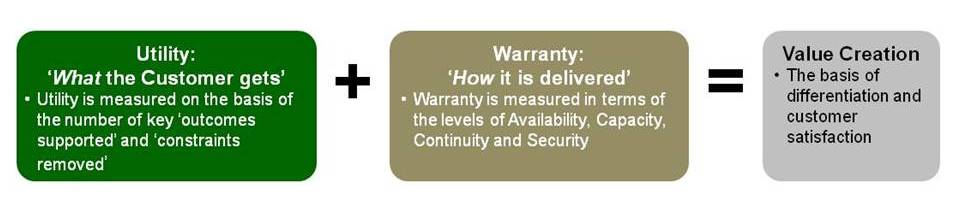
The bundle of activities (People, Process, Technology) is a good place to start but too vague. The definition of Service Assets (Capabilities and Resources) underpin a service. The level of warranty (performance) and utility (functionality) determine the Service Level Objective or Target. As a minimum get the budget holder of a Business Unit, Business Process Owners and the Business Relationship Manager plus the right people together to discuss desired outcomes rather than focus on inputs. The 7 Step Route Map is a proven approach. More detail is required about FAST ITSM than what is available on the BR website.
How Napster Killed ITIL
Craig McDonagh – Service Now
Webcast Vote = 4.2 / 5
What was so appealing about Napster?
Get just what you needed, create your own albums, access what you needed from home, find what you wanted easily.
Cloud changes everything that was old is new again – Mainframe / Virtualization / Web
Service Management evolves for the cloud.
Service Catalog automation with SLM is absolutely essential.
Cloud management with Service Now
Service Catalog – Service Request – Request Approval – Workflow – Provisioning – Workflow – CMDB Update – IT Governance.
Service Catalog is a resource for the business and a resource for IT
If you don’t have a catalog, Business users will just use a different Service Catalog.
Service Catalog must be as easy to use as iTunes. totally integrated with Service Management processes, available to everyone, extensible and service centric.
The Business are deciding which Service Catalog to use – Make it Yours
The above example of the 7 steps to get from the Service Request to IT Governance is where internal Service Providers fail. If request fulfilment is so important is it possible to request a new service? Typically users can self provision, for example if more compute units for a performance stress test are required these can be delivered by adding virtual machines. As stated previously Service Requests can be fulfilled by Ariba or a custom solution. Unfortunately most vendors do not address the Service Specification. In addition it is important to Model and target Service level objectives for Customer Facing services.
Service Catalog : Transforming IT into an App Store
Jason Rosenfield (Cask) & Jason Hopwood (AXIOS)
Webcast Vote = 4.2 / 5
Define Business Services Used.
Create a Service Design package.
Understand the customer experience.
What would your customers expect?
Shift incidents and requests upstream to Tier 0 – self service (upstreaming)
Establish Service Catalog vision – Customer perspective, Business perspective, Technical perspective
(different organisations require different views of a service)
Develop Business Case – identify stakeholders from each “Line of Service”
Evaluate existing services. Existing list of customer facing services, supporting services are different.
Define service attributes.
Do not try and tackle all services in initial version of the Service Catalog.
Control the Catalog – approve and manage change.
Deploy the Service Catalog – Assess, Design, Pilot, Implement (deploy in consumable phases)
What can AXIUOS and CASK do to help? CASK has a Cheat SheetTM and SC BuilderTM (Kick Start)
It is important that Business Units are treated differently so that their needs are understood. A Service Specification should include the service offerings (customer facing) for each Business Unit e.g. a global Investment Bank will have Wealth, Asset and IB business units each with specific requirements.
The Line of Service approach is very effective. By taking a Service Line view it is possible to articulate to a Business Owner exactly what and who delivers their service. The Service Manager or Service Owner is able to provide visibility into who is providing their service from an end to end / front to back perspective.
Service Catalog – It can deliver more value than you think
Matthew Burrows – BSM Impact
Webcast Vote = 4.2 / 5
ISO/IEC 20000-1 is a service management system standard.
Documented catalogue of services (4.3.1 d)
Service provider shall agree a “catalogue of services” with the customer.
Contract Portfolio. Product and Service Portfolio delivered in line with contract commitments.
Business value demonstrated to end user and the product / service of the organisation as awhole – not just IT.
Service Portfolio – possible inclusions are layers of a service model, BPM, Enterprise Tool and capabilities, Enterprise Data Model, ICT, Suppliers / Partners.
Define services in business terms.
Service Request Catalog
Let’s get a consultant in and leave them to do it. Important to transfer knowledge to client.
Promise, Measure, Manage
Service Contracts, Service Account Plans (future demand/initiatives and what we plan to deliver), Self Service
Service Catalog, Service Contract, Service Model, SLA, OLA, underpinning contract
Business Services – two types – business process (Payroll, Billing) and business product / services (Voice, SMS)
Service Contract – what we deliver. Service Catalog – what can be delivered.
Service Model should be developed for each business service.
Service Cost Management – cost allocation, TCO, Benchmarking.
Pointers – model how services support the business.
We must understand our Business (not just IT)
ISO/IEC 20000 is all about “should” and “shall” and the statements should not be seen as discrete requirements. The standard together with ITIL describes what to do but not how to do it. Consultants will increasingly be engaged directly by the (frustrated) Business because they have relevant industry knowledge and can model how business processes are enabled by Information Services. Not sure why an Internal Service Provider should need a Contract Portfolio. External Service Providers have a contract with a defined “schedule of services”.
Service Catalog – 4 Decisions for Execution Success
Ivanka Menken – The Art of Service
Webcast Vote = 4.5 / 5
IT staff confuse a “service” as perceived by the customer with an IT system.
Business Catalog is a pre sales document. The Technical Catalog underpins the Business Catalog.
4 Decisions
- Who are you serving? – Business or external Customers
- People – Hire Attitude, Train Skills, Appoint a Service Catalog Manager
- Cash – budget for service not just products
- Execution
Where to start? Create a draft catalog. Discuss with stakeholders, Update catalog, Use catalog for SLA negotiations.
Business getting IT’ed
Presenter is the author of a book about Business Relationship Management. So there is a service culture and mindset engrained in the above approach. The Business Catalog is not a pre-sales document it is a living repository describing a set of customer facing services. If the Technical catalog and the Configuration management system are so important, what will happen when services are provided from in the cloud and appear as a black box.
Service Catalog Challenges in a Multi Vendor Environment
Managing a Catalog of IT Enabled Services in a Multi Vendor Environment
Bill Powell – Zenetex
Webcast Vote = 4.5 / 5
Services are intangible and non storable. They cannot be managed until they are defined.
What is a Service Catalog? One or more repositories of available IT enabled services.
Realization -= SPM – Service Product Manager / Order to Activation – Request
Basic Service Provider Requirements
- Establish a catalogue of service descriptions with the customer.
- Maintain an up to date catalog.
- Update Service Catalog when new or changed services are introduced.
- Review with the Customer at planned intervals.
RACI matrix with Service Product Manager – Accountable and the CIO – Responsible
In a Multi Vendor environment who is responsible for integrating the enterprise Service Catalog?
Do Service Providers have agreements with each other?
Internal Service Provider, Service Integrator as a separate provider, External Service Provider.
No one supplier is responsible for end-to-end services.
New Catalog Requirements
- Integrated trusted source of available services
- Cross supplier standards to enable integrated view
- Cross supplier dependencies included in Service Descriptions
Critical Success Factors – Catalog Information Integration, Tools Integration, Catalog Support.
As to be expected from the mentor of the ITILv3 Service Strategy core volume, sound advice which reflects where most organisations are today and will be moving to in the future. Internal Service Providers are dinosaurs because they do not have the breadth of capabilities required to provide value to the Business at the right price point. Given this it is important that a “Retained Organisation” of, senior and few in number, personnel is established who have experience of managing in Multi Vendor environments and are able to stitch together the components (Service Assets) of the end to end service. The members of the “Retained Organisation” should be hybrids in that they understand both the Business and IS.
Service Catalog and Cloud Computing : No Catalog No Cloud
Rodrigo Flores – Cisco
Webcast Vote = 4.6 / 5
Explosion in the amount of Information
Growth of connected devices
Explosion of Apps and Social Media (AppXchange, Google Apps, iPhone, Amazon Web Services)
Very beginning of a major shift – “Big Switch”, Nicholas Carr. The significance of a shift to Cloud Computing.
Rich Service Models Evolve – BYOPC (Build Your Own PC), Oauth (ID Access Management), IAAS (Infrastructure as a Service – Data centre)
The power of Cloud – pooled resources, delivered as service.
Cloud based IT Delivery Model. Corporate, Marketing, Finance, Engineering, HR
Step One – Service Catalog is standard, componentized, technical service offerings, ready for automation. Self-service. What’s new is the focus on automation processes.
Step Two – make it actionable
Overview of CITEIS (Gen2) orchestration, provisioning, availability, support and maintenance windows, order fulfilment.
CISCO IT benefits – Agility and TCO reduction
Recommendation – Crawl, Walk, Run
Step Three – implement a roadmap for standard offerings in your catalog
All things “Cloud” are very topical and cannot be ignored because they will have a major impact as organisations look for agility and value for money. The explosion of big data and information along with increasing use of mobility options means that IT is no longer in control. Customers and corporate users have a bigger say / voice in how they consume services.
For me the presentation went off message with the overview of CITEIS. CISCO purchased newScale and have force fitted / diluted the functionality to focus on CISCO products and services rather than what the customer wants.
Key Observations
(reply to whatdoesgoodlooklike@gmail.com or @WDGLL)
IT only exists to serve the Business. The Business increasingly treat IT as a commodity and if the Internal Service Provider is not demonstrating value against higher expectations then the Business will bypass IS and commission services from alternate providers.
It is disappointing that the (IT) Service Management industry has not addressed a key dependency required to create a meaningful Service Catalog. IT is still detached from the Business. BITA – Business IT Alignment, Business Service Management, Business Technology Management were meant to bridge the service expectation gap. IT still expect to talk about technical widgets whilst the Business has much more understanding of how to communicate what outcomes they expect and have little interest in the how it is delivered.
I have coined a term for the fact that IS is tightly integrated with the Business – “bISness”
It is important to promote and engender a service culture and mindset by arranging for IS personnel to walk in the shoes of the customer. This can be easily achieved through being aware of the day in the life of their business counterpart. Alternatively encourage staff to co-locate with the Business areas they provide day to day support in order to improve understanding of how their actions enable business operation.
Here is a 3 step approach to obtain the information that is required in order to create a Service Catalog.
Step 1 – Create a Service Specification
This Service Specification defines the scope of Service(s) offered to the Business by Service Provider, how the Service(s) will be managed and how performance of these Service(s) will be measured.
The Service Specification is intended to create a common understanding of service priorities, agree responsibilities and articulate the expectations and obligations of both parties. To work effectively, it must be viewed as a two-way living document with both the Business and the Retained Organisation having shared expectations and mutual obligations.
Step 2 – Define Customer Groups
It is important to appropriately define Customer Groups within your organisation. Understanding the specific requirements of each Customer Group will enable the Service Provider to better manage expectations and achieve improved levels of customer satisfaction. Customer Groups are logical groupings within the Business to which services are provided. Each Customer Group may have different service level needs.
Customer Groups can also be further divided into Customer Types. Customer Types are users in Customer Groups with similar service requirements.
Step 3 – Define the Service Model
Describe the critical interactions between the Business / end user and the Service Provider setting out the end to end view – Tier 1 (Service Desk), Tier 2 (Support), Tier 3 (3rd Party S/W vendor)










 thisiswhatgoodlookslike