Are Facebook and Google truly innovative companies?

HarvardDisruptive Innovation Explained

Clay Christensen, Harvard Business School professor and the world’s most influential management guru according to the Thinkers50, lays out his landmark theory.

The Masters of Innovation (extract of 6 from 12) – article by Scott Anthony, HBR

Who he is Most important Innovation lesson
Clayton Christensen -Harvard Business School professor and Innosight co-founder Doing everything right can leave a successful organization susceptible to attack from a disruptive innovator who changes the game with a simple, accessible, or affordable solution.
Steve Blank – lecturer at Berkeley and Stanford A startup is a “temporary organization searching for a repeatable and scalable business model”—a structured search process maximizes your chances of success.
Richard N. Foster -McKinsey’s leading light on innovation for two decades To outperform the market, you have to change at the pace and scale of the market, without losing control.
A.G. Lafley – Former Chairman and Chief Executive Officer, Procter & Gamble Innovation is a process that can be managed and measured; the key to successful innovation is a “consumer is boss” mindset.
Michael Mauboussin -Chief Investment Strategist, Legg Mason Breakthrough insight can come from applying lessons from nonobvious fields to your problem.
Joseph Schumpeter – Austrian economist “The problem that is usually being visualized is how capitalism administers existing structures, whereas the relevant problem is how it creates and destroys them”; sometimes you have to destroy in order to create.

economist

Economist – Annual Innovation winners (3 from 8)

“One of the chief ways in which intelligence presses forward is through innovation, which is now recognised as one of the most important contributors to economic growth. Innovation, in turn, depends on the creative individuals who dream up new ideas and turn them into reality.

  • Computing and telecommunications: Jack Dangermond, president of the Environmental Systems Research Institute (Esri) and John Hanke, vice-president of product management at Google, for pioneering and popularising the use of geographical information systems, otherwise known as computerised maps such as Google Earth.
  • Process and service innovationMarc Benioff, chairman and chief executive of Salesforce.com, for pioneering web-hosted enterprise software under a “software as a service” model. Instead of installing software, users simply access it through a web browser.
  •  Corporate use of innovation: Google. From its origins as a search engine, it has become an innovative leader in many other areas including online advertising, web-based e-mail, online maps and mobile-phone operating systems”.

Is Facebook a truly innovative organisation

Clayton Christensen considers whether Facebook and Google are truly innovative companies, at The Economist’s Ideas Economy: Innovation 2012 event in Berkeley, California.

Economist, Technology Quarterly

“The tech world is changing so fast that it brings to mind Joseph Schumpeter’s comment about the “perennial gale of creative destruction” that sweeps through economies as innovative insurgents take on entrenched incumbents”.

WDGLL specs

So the benchmark of a truly innovative company is the ability to create new business models in response to threats and opportunities.

Both Forbes and Christensen mention Intuit and their “Lean StartIn” events which bring together small teams of employees who participate in intense two-day brainstorming sessions and create startup-like ideas for products.  The typical conversion rate of idea to product is 10% at Intuit.

Seeing What’s Next: Using the Theories of Innovation to Predict Industry Change by Clayton M. Christensen (Author), Scott D. Anthony (Author), Erik A. Roth (Author).


Leave a comment

Filed under Business

Are Returnships a proven approach to source experienced talent?

Clients are increasingly looking at smarter ways to mobilise change / transformation teams.  So it was with great pleasure that I bumped into an old consulting colleague who had returned to the workplace after a career break.

Sylvia Ann Hewlett

President of the Center for Work-Life Policy

“Returnships” (a term trademarked in 2008 by Goldman Sachs) help create what Hewlett calls “on-ramps” for people seeking to return to work. These short-term, nonbinding arrangements can be a valuable way to reduce the risks (real or perceived) of hiring people who’ve chosen to take an extended break.

Off-Ramps and On-Ramps:

Keeping Talented Women on the Road to Success

Off-Ramps and On-Ramps documents the successful efforts of the Hidden Brain Drain Task Force – a group of 34 leading-edge global companies including General Electric, Johnson & Johnson, Lehman Brothers, and Time Warner. Spearheaded by Sylvia Ann Hewlett, over the last three years the Task Force has developed and driven 18 best-practice models for companies seeking to recruit, retain, and reattach talented women

Living Through a Career Off Ramp

Why Women Still Can’t Have it All 

Princeton professor and former State Department policy planning director Anne-Marie Slaughter describes how her appearance at the Carnegie Council in February 2012 shaped her widely-praised “Atlantic” July/August 20102 article “Why Women Still Can’t Have it All.”

Ultimately Women Will Have it All 

“Returnships” let companies audition professionals who are resuming their careers.

by Carol Fishman Cohen for the Harvard Business Review

Returnships are a valuable new tool, but it’s important to recognize that there have always been successful professionals who stepped out of the workforce and returned with aplomb.

Relaunchers – Back on the Career Track

It is important that companies sponsor initiatives to “reattach” with mid-level career professionals interested in re-entering the workforce after a career break. 

Returnships allow people to re-engage with the world of work through flexible, meaningful work while simultaneously “testing the waters” for both the employee and the company.

At a time when companies are hiring increasing numbers of contractors than they are permanent staff it would appear that Returnships provide an opportunity for both parties to try before you buy.

Leave a comment

Filed under Business

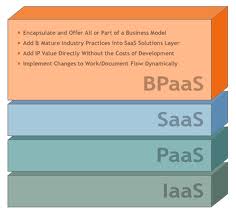
Is BPaaS just BPO emerging from behind the Cloud?

Business Process as a Service (BPaaS)

BPaaS is Business Processing Outsourcing run as a Cloud service.

For example, human resources as a service.

“Cloud Business Process Services / Business Process as a Service (BPaaS)

Gartner is predicting that BPaaS will grow from $84.1B in 2012 to $144.7B in 2016, generating a global compound annual growth rate of 15%.

Of the eight subsegments Gartner is tracking in their BPaaS forecast, Cloud Payments (17.8%) Cloud Advertising (17.1%) and Industry Operations (15.1%) are expected to have the greatest compound annual growth rates (CAGR) in revenues generated by 2016.

In terms of revenue generated, Cloud Advertising is projected to grow from  $43.1B in 2011 to $95B in 2016, generating 17.1% CAGR in revenue growth through 2016.

Cloud Payments are forecast to grow from $4.7B in 2011  to $10.6B in 2016, generating a CAGR of 17.8% worldwide.

E-Commerce Enablement using BPaaS-based platforms is expected to grow from $4.7B in 2011 to $9B in 2016, generating a 13.6% CAGR in revenue globally”.

Example Wipro BPaaS solutions:

HR BPaaS: Wipro’s HR BPaaS is an efficient, replicable and repeatable HRO solution, leveraging industry-leading cloud technologies, back office operations support and value-added services in an integrated, streamlined fashion to deliver high-quality HR services. Built on the Workday platform, the solution includes HR Process Consulting & change management consulting for effective HR Transformation.

Procurement BPaaS: Wipro’s S2P (Source to Pay) BPaaS solution is an end to end Business Process as a Service platform which provides customers complete control over their spend and also improved supplier relationship management.

Wipro S2P BPaaS solution is built on a combination of industry leading SaaS solutions by leveraging best in class platforms across spend analysis, eSourcing, Contract Management, Procurement, Accounts Payable, Business Analytics reporting and SRM.

ADP Employease— An Online business process services for HR,

Employee Rewards and Recognition Platform.

A structured web based rewards and recognition program for medium to large organisations looking for a centralised and easy to manage employee recognition program across multiple locations.

Cloud confuses BPO

Analyst firm Ovum says suppliers are turning off customers by mixing BPO with BPaaS.

Vendors risk turning off potential customers by over complicating their business-process-as-a-service (BPaaS) offerings, a leading technology analyst company has warned.

The global analyst firm Ovum today releases its new report: ‘The Evolution of Business Process Outsourcing: from Platform BPO to BPaaS – Balancing industrialisation and business complexities’.

Business process outsourcing (BPO) refers to the contracting of key operational activities to third parties, whether those are supporting activities such as HR, finance or facilities management or primary line-of-business activities such as manufacture.

Business-process-as-a-service (BPaaS) represents the next stage of evolution – having the work outsourced and managed in a cloud environment.

However, Ovum states that suppliers are over complicating the issue of BPO by focussing too much on the impact of cloud. This is blurring the distinction between value propositions the different services that are on offer. Ultimately, the confusion causes many prospective customers to disengage from the entire area.

Ovum says its sees BPaaS as an evolution of software-as-a-service – where applications are delivered through remote hosting, rather than from an on-premise server – instead of being an evolution of BPO.

Thomas Reuner, principal analyst of IT Services at Ovum and author of the new report, said: “In the narrower context of BPO, Ovum believes that BPaaS is more a future vision that is not yet resonating with buying organisations. Most marketing messages are reminiscent of the early hype around cloud services.”

Overall, it is the end result that customers are seeking, rather than the technology that allows it to happen. Reuner warned suppliers that they must not lose sight of the fact that many companies will be looking at facilitating a closer knit group of suppliers that they work for, in the interests of management efficiency, by seeking new BPO contracts. Here too, cloud could present problems.

He said: “Despite being highly standardised offerings, cloud services (and so BPaaS) will lead to more complexity for buying organisations as cloud standards have still to emerge. This will require new sets of governance skills to make this a reality.

“The push toward platforms is increasingly accompanied by bundling of infrastructure components as part of the BPO contract. Consequently the boundaries between IT outsourcing and BPO are becoming blurred.”

Morgan Yeates @ Gartner  – “Traditional HR outsourcing services are gradually being replaced by cloud-based business process as a service, which offers higher-quality services at lower costs to existing and entirely new markets”.

With BPaaS offerings buyers purchase outcomes delivered by tried and tested “best practice” business processes, ranging from general business activities to more industry specific solutions, such as HR, Procurement and Advertising etc.

The projected growth of Advertising delivered via the Cloud Service Model, as per the Google AdSense example, is relevant however other market segments like HR, S2P may require a degree of tailoring and configuration of information assests that may not fit the BPaaS cookie cutter delivery method.

BPaaS is not just about offerings for mid to large organisations it is all about providing solutions to the needs of individual buyers.

Maximize Your Time and Lower Your Costs By Outsourcing Your Business Processes To Our Professionally Trained Virtual Assistant.

Leave a comment

Filed under Business

Will the EU become a leader in world Cloud Computing?

 EU strategy for Cloud Computing

Neelie Kroes, Digital Agenda Commissioner

Every European citizen should have a key to their own individual cloud locker to keep personal content securely.

Setting up the European Cloud Partnership

Neelie Kroes speaking at the World Economic Forum

“Cloud Computing will change our economy. It can bring significant productivity benefits to all, right through to the smallest companies, and also to individuals. It promises scalable, secure services for greater efficiency, greater flexibility, and lower cost.

Our flagging economies need us to make the best out of this. We cannot afford anything less. We need to act to support speedy uptake of Cloud Computing in Europe.

This time last year I announced my plan to launch a Cloud Computing Strategy that would make Europe not just Cloud-friendly but Cloud-active.

Since then, consultations with Cloud providers, users and consumers have been extensive. Much work has also been done by interested parties in Europe and with major trading partners to identify the main issues that need to be addressed.

The results are clear: many still hesitate before the Cloud. They worry: how do I know what service I am buying? Will my data be protected? Which providers can I trust? If I don’t like what I am getting, can I switch providers easily? Or, if I really don’t like what I’m getting, can I easily enforce the contract through legal action?

All these issues – standards, certification, data protection, interoperability, lock-in, legal certainty and others – are particularly troublesome for smaller companies. They are the ones who stand to benefit the most from the Cloud – but who don’t have a lot of spending power, nor resources for individual negotiations with Cloud suppliers.

Where these barriers exist, I am determined to overcome them.

We have already made a start on the regulatory side: the Commission has proposed new rules for data protection in the twenty-first century, including for data in the Cloud.

But we can do more. Look at the public sector. Public IT procurement is large, about twenty percent of the market, but today it is fragmented with limited impact. We can harness this buying power through more harmonisation and integration. And, yes, ultimately also through joint public procurement across borders. Why is this important? Because the Cloud sector will listen and adapt, creating benefits for Cloud adoption throughout our economy. For example: more standardised services, new and better offers, cheaper prices. And it is a true win-win: the Cloud market will grow, bringing opportunities for existing suppliers and new entrants. And Cloud buyers, including the public sector, will buy more with less and become more efficient.

How do we get there? Today I am inviting public authorities and industry, Cloud buyers and suppliers, to come together in a European Cloud Partnership”.

The Cloud transforming our economy

Neelie Kroes, European Commission, talking about the great opportunitites of cloud computing – which could provide a boost worth hundreds of euros a year per person in Europe. But too many people & companies are put off using the cloud by uncertainty or a lack of trust. The Commisison’s European cloud strategy will boost that trust, unlock those opportunities – and ensure the economies of scale you only get at a European level.

The European Commission expects that enabling and facilitating faster adoption of cloud computing “…could mean an additional EUR 45 billion of direct spend on Cloud Computing in the EU in 2020 as well as an overall cumulative impact on GDP of EUR 957 billion, and 3.8 million jobs, by 2020.”  

Cloud Computing and opportunity to growth – Regions4Cloud.

Mark Lange, Senior Policy Counsel, Microsoft

Mark Lange at Regions4Cloud in Bruxelles, a Microsoft event for promoting a best practices exchange among european regions from Italy, Spain and Portugal on key issues as digital innovation and Cloud Computing for PA and SMEs.

“Cloud Computing is a evolution in technology that represents an opportunity for economic growth in Europe.”

“The Commission’s strategy is aimed at allowing a rapid and harmonised adoption of cloud computing technology, consolidating the currently fragmented digital single market and overcoming the confusion caused by the jungle of standards that has grown up”.

The moment that regulation and standards are in force across the European Union the louder the level of noise will be heard from concerned Cloud Computing Service Providers.  This stakeholder group will campaign heavily to win a contract to become a  member of the new European Cloud Partnership and one of the approved Cloud Service Providers to Government / Public Agencies.

In these times of fiscal austerity across Southern Europe the concept of a European Cloud will enable cost-savings and realise efficiencies of scale.

The benefits of having a borderless digital delivery capability will enable citizens to access publicly available information securely from any device.

The European Cloud is likely to take shape from 2015 although standards may take far longer to agree.  For me the pace of EU Cloud Partnership implementation will be driven by the demands of EU citizens for cross-border services – online payments. mobility and access to big data.    

In the meantime lets see how digitally connected we are in the EU.

Digital Agenda Scoreboard results 2012

Leave a comment

Filed under Business

Forrester : We need our customers more than they need us

OUTSIDE IN: A FORUM FOR CUSTOMER EXPERIENCE PROFESSIONALS EMEA

The Power Of Putting Customers At The Center Of Your Business

November 06-07, 2012 in London

We’ve entered a new era that Forrester calls the age of the customer — a time when focus on the customer matters more than any other strategic imperative.


To make the leap from incremental improvements to breakthrough transformation, companies must routinely perform a set of sound, standard practices. These practices fall into six high-level disciplines:

  • customer experience strategy;
  • customer understanding;
  • design;
  • governance;
  • measurement; and
  • culture.

How To Profit From The Outside-In Perspective On Customer Experience

Customer experience leads to profits . . . but not because it makes your customers feel warm and fuzzy, and not if it’s just a slogan. Customer experience leads to profits . . . if you treat it as a business discipline. In fact, customer experience is the greatest untapped source of both decreased costs and increased revenues in most industries — but only if you take the time to understand what drives it and how you can benefit financially from improving it.

I particularly like the Fidelity case study from the Outside In book.  The competition for share of the High Net Worth individual wallet is intensifying. The quality of Wealth and Asset Management services are key brand differentiators in the Financial Services industry.  An increase of four and a half times in individual investments is truly stellar.

Kerry makes the point that Internal Shared Services functions [HR, Finance, Procurement, IT] must also take an Outside In approach.  Typically the guiding principles of these back-office capabilities is to hold the Business captive because they firmly believe that there is no alternative.  This level of arrogance will not be tolerated by the Business who will choose to spend their budget elsewhere. Outcome based services are delivered by 3rd Party Providers who have built their brand on delivering on their promises to the customer.

Leave a comment

Filed under Business

Gartner Symposium Says that there is a Nexus of four forces

Peter Sondergaard – Opening Keynote 

Nexus – the Next age of computing that accelerates the information layer of the economy generating revenue by creating information from big data.

Nexus of 4 Forces:

  • Cloud is the carrier of the other 3 forces,
  • Mobile is personal cloud,
  • Social Media is only possible via the cloud and is moving from the outside of enterprises to the core of operations,
  • Big Data is the killer app for the cloud. Tapping a constant stream of information with an endless array of possibilities.

More than 1.6 billion smart mobile devices will be purchased globally in 2016,

“Mobile is about computing at the right time, in the moment. It is the point of entry for all applications, delivering personalized, contextual experiences,”

“By 2015, 4.4 million IT jobs globally will be created to support big data, generating 1.9 million IT jobs in the United States,” Sondergaard predicted.

04:40 Mary Mesaglio – incredible time to be a CIO.  Your CEOs want you to make your impact felt where the enterprise meets the outside world and where revenue is generated.

iPads will be more common in the enterprise than BlackBerrys in two years, predicts Gartner

John Chambers [CISCO CEO] predicted a shakeout among technology vendors in the short term. “Any of the top six vendors who thinks they’ll be in that top six five years from now for sure will be wrong,” Chambers said. Of the six, perhaps three would remain near the top of the heap, he said.

FT Connected Business: “Big data” to Fuel IT Spending”

Peter Sondergaardr talks about how ‘big data’ – huge volumes of data generated by digital business – will drive $28bn of worldwide IT spending this year, potential job creations and the importance of social networking and mobile.

Gartner say the Nexus of four forces will drive IT spending over the next four years.  Mobile, Social Media and the Consumerization of IT are driving the industry.

What Gartner predict is that Big Data is the “Big Bet” that companies should invest in to turn the growing repository of information held in the company data stores into a revenue stream,  For example, Retail Banks should exploit their customer information in the same way as the big supermarkets use loyalty cards to target offerings customised to the needs of their customers.

4.4 million jobs generated by Big Data is questionable.  For me it is more about Analytics recognising patterns in data to help create that source of revenue generation.  Let’s see how events unfold.

Also this week Gartner launched a new eBook – The Digital Edge which champions the need for a Chief Digital Officer.  The CDO is a role that exists in the Publishing industry both Print and Online.  Let’s see if there are more CDO job adverts in the next 12 months.  

Gartner Mark McDonald and The Digital Edge eBook

“Mark McDonald, Gartner, discusses The Digital Edge eBook and shows how Royal Caribbean and other companies leverage digital technology for growth by combining their digital and physical assets in new ways to create value, revenue and results.

This eBook looks at how organizations need to:

  • Thinking differently about digital in terms of the innovations resulting from separating customer accessible value and company addressable revenue that create disruptive digital strategies.
  • Selecting the right type of digital edges based on new combinations of digital and physical resources.
  • Becoming a digital organization by building up digital solutions in new ways, highlighting the need to change Board level treatment of technology and the situations that call for establishing a Chief Digital Officer.

These are the three sections of The Digital Edge eBook that includes experiences of companies ranging from Royal Caribbean Cruise lines, United Stationers, IONX, Rabobank, Copenhagen Airport, CDW, the Children’s Hospital of Los Angeles, among others.

An edge forms where two sides meet.  In the case of a digital edge, executives need to determine how to bring together their current ‘physical’ resources with new ‘digital’ resources and capabilities.  Those that find the right edge, one that changes industry borders, accelerates consumerization, incorporates behavior will forge a future of sustainable customer value, company revenue and results”.


4 Comments

Filed under Business

PWC – Global State of Information Security Survey, Changing the Game

Changing the game

Global State of Information Security®

Survey 2013 – LINK

“While tight budgets have forestalled updates to security programs, many businesses are confident they’re winning the game. But the rules−and the players−have changed.

Information security has always been a highstakes game, one that demands a smart strategy, the right technology, and an unblinking focus on adversaries. Today, however, both the game and the opponents have changed. To win, businesses must play by new rules and bring advanced skills and strategy to the table.

17 Key findings from survey [Extract #9 and #10]

Finding #9

Safeguarding information is easier when you know where that information is. But organizations are keeping looser tabs on their data now than they did in years past.

This is a basic point that survey data suggest has been lost on a growing number of respondents. While more than 80% say protecting customer and employee data is important, far fewer understand what that data entails and where it is stored. This is significant because customers increasingly want to be in control of their personal data and able to “turn off” the flow of information from companies.

Finding #10

As mobile devices, social media, and the cloud become commonplace both inside the enterprise and out, technology adoption is moving faster than security.

Our data show, for example, that 88% of consumers use a personal mobile device for both personal and work purposes, yet just 45% of respondents have a security strategy to address personal devices in the workplace, and only 37% have malware protection for mobile devices.

How leaders play the game

When it comes to securing newer technologies such as mobile devices, social media, and the cloud, leaders are ahead of the pack on strategy, and have a sizable lead in deploying mobile device malware protection and launching mobile security initiatives.

Information security today is a rapidly evolving game of advanced skill and strategy. As a result, the security models of the past decade are no longer effective.

Today’s information security leaders acknowledge that playing the game at a higher level is required to achieve effective security. They know that the very survival of the business demands that they understand security threats, prepare for them, and respond to them quickly”.

IT security: Stay calm – be resilient

William Beer, a director in PwC’s information and cyber security practice, Ray Stanton, vice-president of professional services at BT Global Services, and Bryan Glick, editor-in-chief of Computer Weekly.

Assume the state of compromise

Maturing of Information Security to become a Boardroom issue

ISF’s 2012 Standard of Good Practice

Executive Summary – LINK

Information management & information security:

the Information Risk Maturity Index

Research conducted by Iron Mountain and PwC surveyed 600 mid-sized businesses from six European countries. Across the geographies surveyed, businesses showed themselves to be falling short when it comes to information management. This shortfall is exposing European businesses  to unnecessary levels of information risk.  Hungary came first with the UK last.

PWC Survey Finding 10 – “88% of consumers use a personal mobile device for both personal and work purposes”

In the “post-PC era” the Chief Security Officer must implement a smart security strategy to control company data regardless of how it is being accessed by the employee.  So to what extent is it possible to lock-down access to sensitive company information from a device that is not owned by the organisation?

“Securing newer technologies such as mobile devices, social media, and the cloud” becomes even more of a challenge as work and leisure use of smartphones and iDevices merges.  More time is spent accessing content from the sofa and bedroom rather than by sitting in front of a PC.

If you are in London it may be a good idea to attend the IT Security Conference on 31st October. The session on Tomorrow’s Information Security – Mark Brown, [Director – Risk @ Ernst & Young] caught my eye.

The Information Security Forum update their Standard of Good Practice annually so that is a good place to start on your journey to strengthening the protection of your information assets.

Leave a comment

Filed under Business

Remember Internet time? You’re now living on mobile time.

Transformation in the Enterprise: The Post-PC Era
Grant Shirk, Senior Enterprise Product Marketing Manager, Box

“Mobile has become a major catalyst for innovation in the enterprise. With more than 60% of employees sharing and creating corporate content away from their desks, we are witnessing the rapid transformation of the enterprise, and employees’ perceptions of “the office.”  This shift is changing the way people work together and creating new opportunities for workplace collaboration. In this session, see how leading companies are using collaboration and learn how you can harness the cloud to make mobile devices tools for productivity, not just consumption.  Welcome to the Post-PC Era”.

Always On. Always Connected.

“Given that mobility—like the Internet before it—is equally confusing and compelling, it only remains for IT to craft a strategy for conquering it. Creating such a strategy means first acknowledging the shift from applications containing data, logic, and presentation tiers to one in which services exchange information.

In essence, CIOs must embark on a three-step process to hone their strategy.

Step one: Discovery. Identify current projects as well as future goals; keep in mind that business units may be tackling applications on their own.

Step two: Acceleration. Having identified the projects you want to pursue and the underlying technologies, promote acceleration by standardizing your efforts as much as possible. Use common code – aka an “application factory” – for basic elements spanning people, process, and tools. These help reduce overlap and increase developer efficiency. Establishing common interface elements for employees will also help reduce training time and increase productivity.

Step three: Innovation. Once you’ve created a strong foundation for internal progress, you can start looking at other capabilities to help make your mobile applications even more of a competitive advantage. How can you target those key areas and create even better tools for helping to reduce sales cycles or gathering customer insights at the moment they’re making purchase decisions? Those kinds of insights are closer to reality than ever before, but only if you understand your strategic goals.

Perhaps the most important thing to remember is that you’re still aiming at a moving target. Remember Internet time? You’re now living on mobile time. Devices continue to evolve, as do application development tools. Just as you had to do in Internet time, you must focus on what aspects of mobility serve your business requirements most, and recalibrate them periodically. While you can easily refresh some strategies every year or two, for the time being, you must reconsider your mobile strategy as often as every six to 12 months to verify that you’re still placing your bets on the right trends”.

The New Digital Mobile Consumer:

How Large Companies are Responding

“The Digital Mobile Consumer: Key Findings

  1. Many businesses are making fundamental changes to their products/services and processes to win over the digital mobile consumer.
  2. The average company in the four regions of the world will spend between $13 million and $22 million this year on technologies, business process changes, and other expenses to respond to digital mobile consumers.
  3. Marketing, sales and service functions are taking the lead in shaping their organization’s overall strategy for serving the digital mobile consumer – but the IT function is integrally involved.
  4. Companies with some of the best opportunities are in sectors that haven’t changed as much as others in responding to the digital mobile consumer.
  5. Designing mobile applications and websites just for tablet devices is becoming a new battleground.
  6. Consumers in Asia-Pacific and Latin America conduct more business through mobile devices than consumers in Europe and North America”.

IBM’s Mobile Enterprise Services

Working securely anywhere, anytime from any device

“IBM Mobile Enterprise Services provides an integrated suite of capabilities for smartphones, tablets and rugged wireless devices—including Apple iPhone and iPad, Google Android, RIM BlackBerry and PlayBook, and Windows Mobile devices.

With a robust set of standard and customized services that help align your business strategies with your mobile requirements, our mobile portfolio includes strategy assessment and infrastructure design services, lifecycle management, mobile messaging and mobile enterprise application management. We help you optimize cost and efficiency with flexible services (including managed and subscription-based offerings), and enhance mobile-user productivity with best-practices processes and advanced technologies”.

So Grant Shark talked about the Post PC Era at the Consumerization in IT tn the Enterprise Forum in New York on Wednesday.

As Accenture say we are now living on mobile time with a tremendous boost to personal productivity.

Managing Mobility is a high priority for Enterprise IT.

Managed Mobility Services must provide a safe secure offering for information workers on the go.

One Device Control Service is offered by Apperian with the launch of a Remote Control solution for IOS [iDevices] – LINK

Apperian pitch “Mobile devices go anywhere and everywhere – so there’s no need to be on the same local network or use a VPN to use Remote Control. An administrator can remotely control a device that is behind a home router, firewall or captive network with no additional configuration. It even works over cellular network, so you can provide support to a user no matter where they are”.

Now that you effectively have a personal network device with access to more information than a small mainframe in the 80’s, be careful that you do not mis-place your mobile device or download any malware.

Leave a comment

Filed under Business

Gartner looks at Internet TV Service Providers

Competitive Landscape: Internet TV Service Providers

Published: 28 September 2012

Report Extract – G00228805

Analyst : Fernando Elizalde

Market Players

“Internet video providers can be grouped according to the type of content they provide — broadcast TV versus premium TV and long-feature content. Although at the onset of Internet TV services this distinction was very clear, it has since begun to blur.

We group the market players into the following group players:

  • Pure play OTT online providers. These OTT companies started as providers of TV content online — ad-supported or subscription-based — and have remained mainly so. Among these companies are PPTV, PPStream, Youku and Zattoo.
  • Broadcasters. National organizations, such as the BBC, Channel 4, NBC, TVE, and SVT Play, that produce, broadcast and otherwise distribute content.
  • Content aggregators. Distributors of premium content, such as LOVEFiLM, Netflix, Vudu, Vodder, Hulu, Amazon Instant Video, Maxdome, blinkbox, LeTV, and Mubi.
  • Technology vendors turned OTT providers. This type of vendor has developed specific technology solutions positioned for OTT video and provide a platform for pure play, content aggregators and content owners to stream video to the TV screen, examples being Apple TV, Roku and Boxee Box.

Production of Original Content

Netflix and Hulu have started to produce original content, in some cases in co-production with foreign broadcasters. Hulu’s first original series was streamed in January 2011, and it has been followed by three more additional series. Most recently, Hulu and the BBC, the British public broadcaster, announced the co-production of the fourth season of a popular political comedy. Likewise, Netflix first streamed original programming in 2011 and co-produced a TV series with Norwegian broadcaster NRK1. Netflix expects to commit approximately 5% of its content acquisition budget to original programming. As a means to achieve differentiation at a lesser cost than signing exclusive distribution with major studios, this is a strategy that can prove effective for Internet TV service providers with financial strength to execute it”.

TV-Everywhere Emerges as a Valid Counter-Offensive

Against Internet TV

“Pay-TV service providers are starting to implement TV-everywhere strategies, making their content, partially or in full, available over any connected screen in the home, and where licensing agreements and regulatory environment allow it, outside as well. Their content offering is made available on every connected screen through mobile apps for media tablets and smartphones and TV apps for broadband-connected TVs and streaming boxes. This is also followed by premium channels that make their content available to subscribers to pay-TV services on multiple screens (for example, HBO, Disney and Showcase) or even launch stand-alone online services as in the case of HBO in the Nordic countries.

Example Recommendation

Internet TV service providers must differentiate their products based on exclusive content, such as first on-demand release window, innovative features (such as content discovery and recommendation tools), or accessibility on screens and platforms, to effectively compete in the increasingly commoditized market”.

Google TV vs Internet TV

There is much debate in the US whether $7.99 / month for Hulu Plus is good value.

To what extent are demand based or value based pricing the right option for the consumer going forward.

Gartner – “premium content producers and channels, such as HBO and Showtime, don’t generally license their most popular content to video streaming services to maintain a differentiation of their own subscription services”

For me it is not about the delivery method, in an always connected world, it is about which provider has the premium content I want to watch [e.g. Breaking Bad, Treme, House of Lies] at a price point I am prepared to pay.

Leave a comment

Filed under Business

How do you build a Superior Service Organisation?

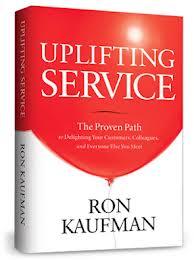
UPLIFTING SERVICE

The Proven Path to Delighting Customers,

Colleagues and Everyone Else You Meet

“THE MOMENT: We are in a crisis of service. Global economies are transforming at record speed, and our populations are largely unprepared. Customers are angry and complaining. Service providers are irritated to the point of resentment and resignation. We face a service crisis, but how can that be?

We live in a world deeply connected by service. In business we have external customer service and colleagues providing internal service. In our communities we depend on government service, military service, and foreign service. Our personal lives are infused with medical, financial, and religious service.

Yes, service is everywhere. But there is a painful disconnect between the volume of service in our lives and the quality of service we experience with each other. We lack fundamental principles and actionable models for uplifting service. It doesn’t have to be this way.

THE BOOK: Uplifting Service – In this book, Ron Kaufman takes readers on a journey along a proven path into a new world of service. Through dynamic case studies, and perspective-changing insights, readers learn how the world’s best performing companies have changed the game in their industries through service — and how you too can successfully follow this path to uplifting transformation.

Introduction:

The Problem with Service Today

S E C T I O N O N E : WHY?

1 Journey into a New Culture

2 The Gateway to Possibility

3 The Proven Path

S E C T I O N T W O : LEAD

4 Taking the Lead

5 Leading from All Levels

6 The Journey to Magnificence

S E C T I O N T H R E E : BUILD

7 Common Service Language

8 Engaging Service Vision

9 Service Recruitment

10 Service Orientation

11 Service Communications

12 Service Recognition and Rewards

13 Voice of the Customer

14 Service Measures and Metrics

15 Service Improvement Process

16 Service Recovery and Guarantees

17 Service Benchmarking

18 Service Role Modeling

S E C T I O N F O U R : LEARN

19 Learning Takes Practice

20 The Six Levels of Service

21 Your Perception Points

22 The BIG Picture

23 Building Service Partnerships

24 Taking Personal Responsibility

S E C T I O N F I V E : DRIVE

25 Your Implementation Roadmap

26 Learning from Experience

27 More Than a Business Philosophy

So What’s the Solution?

“First, we must transform the outdated view that service to others makes us subservient, subordinate, or servile. Service is taking action to create value for someone else. And that is the essence of every successful business, organization, and career.

Uplifting service brings pride to service teams and increases service providers’ sense of fulfillment and satisfaction at work”.

What is technology’s role in providing superior customer service?

Technology has an essential role to play: liberating people to serve with the kind of creativity, concern and commitment that only humans can provide to one another.

Here is an example of Superior Customer Service in A Crisis

So all you Service Providers out there if you haven’t read this book then carve out time in your diary to do so.

There are many [free] resources available at http://www.UpYourService.com

Have fun delivering a superior service experience to your external and internal customers.

The Rene Carayol story is a very powerful practical example of What a Good Service Provider Looks Like.

1 Comment

Filed under Business